Where Your Money Actually Goes: Official Game vs. Licensed Operator
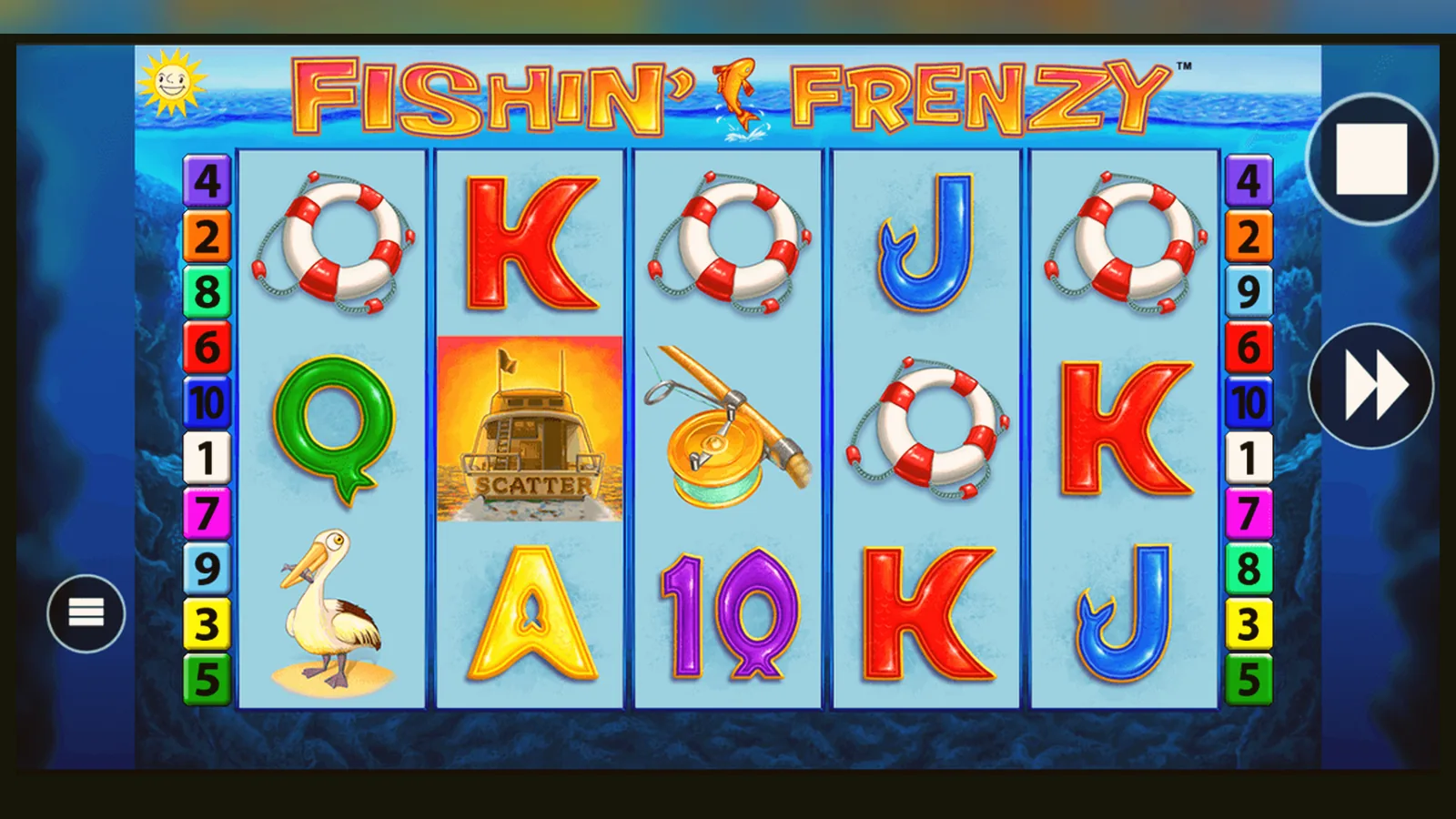
Here's the rule that changes everything: since April 2026, every operator serving British players pays 40% Remote Gaming Duty on gross profits. That's the highest rate in Europe. It doesn't touch your winnings — those stay tax-free — but it shapes which sites bother with a UKGC licence and how they structure their welcome offers.
When people ask where to find the «official» Fishin' Frenzy site, they're usually asking the wrong question. There's no single official casino for this game. Blueprint Gaming built it, but they're a supplier, not an operator. They license the game to dozens of UKGC-regulated casinos, and every one of those is an official place to play — as long as the licence is current. What matters isn't a single URL; it's knowing how to check whether the operator in front of you is genuinely licensed, what your account setup will cost you in time and verification steps, and where your money actually goes when something breaks.
What «Official» Actually Covers (and What It Doesn't)
Official means three things: the game build is Blueprint's certified version (not a reskinned knock-off), the operator holds a valid UKGC remote gambling licence, and the RNG has been tested by an accredited lab. It does NOT mean the site is Blueprint's own casino, that the welcome bonus is better than unlicensed competitors, or that the operator can't go bust and take weeks to process your withdrawal.
Blueprint Gaming supplies the same Fishin' Frenzy build to every licensed operator. The RTP is locked at the provider level — typically 96.12% or 96.06% depending on the version — and the operator can't alter the reels or payout logic. What they CAN change: stake limits, bonus terms, withdrawal speeds, and how much friction they add to your first cashout. A UKGC licence guarantees the game is fair; it says nothing about whether the operator's KYC process will ask for three months of bank statements at the £500 withdrawal mark.
- The game build: Blueprint's code, audited by iTech Labs or Gaming Labs, with the certified RTP and volatility intact.
- The operator licence: a UKGC remote gambling licence number in the footer, searchable in the public register at gamblingcommission.gov.uk.
- The payment rails: debit cards, PayPal, Apple Pay, Open Banking, paysafecard — all in your own name. Credit cards have been banned for gambling since April 2020.
- What's NOT covered: how long KYC takes, whether the operator applies affordability checks at £150 or £500 net deposits, or what the wagering requirement is on that £10 no-deposit bonus.
One-Minute Licence Verification (the Six-Step Walkthrough)
This is the only check that matters. A polished homepage and a trust badge mean nothing; the UKGC public register is the single source of truth. Budget two minutes the first time you do this, then it becomes muscle memory.
- Scroll to the footer of the casino site. Look for a block labelled «Gambling Commission» or «Licence». You need two pieces: the operator's legal name and a five- or six-digit licence number.
- Open a new tab and go to secure.gamblingcommission.gov.uk/PublicRegister. Paste the licence number into the search box.
- Hit search. If the licence is valid, you'll see the operator's name, the licence type (it should say «Remote» for online casinos), and the issue and expiry dates.
- Cross-check the legal name in the register against the name in the footer. If they don't match exactly — say, the site says «Mega Casino» but the register shows «Mega Gaming Ltd» — that's normal. The register lists the legal entity, not the brand. What you're checking is that the NUMBER ties to a real, current licence.
- Look for the status. It should say «Active». If it says «Revoked», «Suspended», or «Lapsed», stop. That operator is trading illegally.
- Check the licence conditions tab. Some operators have specific restrictions — for example, a prohibition on certain payment methods or a ban on advertising. If you see a long list of compliance failures, consider that a yellow flag.
If the footer has no licence number, or the number doesn't appear in the register, you're looking at an unlicensed site. That might be an offshore operator targeting the UK anyway, or a scam front with stolen game demos. Either way, your money has no protection.
Account Setup: What You'll Hand Over and When
UKGC rules require age and identity verification before you can deposit. Most operators run an automated check against credit-reference databases (Experian, TransUnion, Equifax) using your name, date of birth, and address. If that passes, you can deposit immediately. If it fails — because you've moved recently, you're not on the electoral roll, or your credit file is thin — you'll need to upload documents: a photo ID (passport or driving licence) and a proof of address dated within the last three months (utility bill, bank statement, council tax notice).
The first deposit usually clears in seconds via Faster Payments or PayPal. The first withdrawal is where things slow down. Even if you've already verified your ID, many operators re-check at the withdrawal stage, and if your net deposits have crossed £150 in a calendar month, they may trigger an affordability assessment. That's a UKGC requirement introduced in 2024: operators must use credit-reference data to check whether your gambling spend is consistent with your financial situation. At the first tier, it's automated; at higher thresholds, they'll ask for payslips or bank statements.
The App Question: What Exists and What Doesn't
Blueprint Gaming doesn't publish its own Fishin' Frenzy app. What you'll find in the App Store or Google Play are casino apps from UKGC-licensed operators, and Fishin' Frenzy is part of their game library. Those apps are legitimate if the operator's licence checks out. What you WON'T find — and should never install — is a standalone «Fishin' Frenzy Official App» from an unknown publisher, especially one asking you to enable third-party installs or sideload an APK.
Most players just use the mobile browser version. It's an HTML5 build, so it runs in Safari or Chrome without any install, and the performance is identical to the app. The only advantage of a native app is one-tap access from your home screen and sometimes faster load times if the app caches game assets locally. The downside: apps take up storage, and if the operator loses its UKGC licence, the app gets pulled from the store and you're left with an orphaned install.
- Legitimate casino apps appear in the UK App Store and Google Play only if the operator has a UKGC licence. The app listing will show the operator's name — not «Blueprint Gaming» or «Fishin' Frenzy».
- The game inside the app is the same server-based version you'd play in a browser. Your account, balance, and game state sync across devices.
- If you see an APK download link on a site that isn't the Google Play Store, stop. APK sideloading is how fake casinos distribute malware or rigged game clients.
- Some operators offer a progressive web app (PWA): you visit the site in your mobile browser, tap «Add to Home Screen», and get an app-like icon without an install. That's fine; it's just a bookmark with a cached interface.
When Things Go Wrong: Complaint Path and Regulator Escalation
If the operator refuses a withdrawal, closes your account without explanation, or pays out less than you think you won, you have a formal complaint route. UKGC licence conditions require every operator to handle complaints internally first, and if that fails, to submit to an independent Alternative Dispute Resolution (ADR) service. The two main ADR providers for UK gambling are eCOGRA and IBAS (Independent Betting Adjudication Service). Their decisions are binding on the operator.
Start with the operator's complaint email or live chat. UKGC rules say they must acknowledge your complaint within 5 working days and resolve it — or explain why they can't — within 8 weeks. If you're not satisfied, you escalate to the ADR service listed in the operator's terms. You'll submit evidence (screenshots, transaction history, email threads), and the ADR will investigate. Most cases close in 4–8 weeks. If the operator is genuinely in the wrong — for example, they voided a win because of a «technical error» that didn't exist — the ADR will order them to pay you.
- Raise the issue with the operator's support team first. Use email rather than live chat so you have a written record.
- If the response is unsatisfactory or doesn't arrive within 8 weeks, check the operator's terms for the name of their ADR provider. It's usually in the «Complaints» or «Responsible Gambling» section.
- Submit a formal complaint to the ADR service. You'll need your account details, a timeline of events, and copies of any relevant communication.
- If the ADR rules in your favour and the operator still refuses to pay, contact the UKGC directly via their online form. That's the nuclear option: the Commission can suspend or revoke the operator's licence.
- If the dispute involves your own gambling behaviour — for example, you want a refund because you broke your deposit limits — the ADR and the Commission won't help. Self-exclusion tools (GAMSTOP, deposit limits, time-outs) are YOUR responsibility to activate before you play.
Clone Red Flags and What «Official» Status Doesn't Guarantee
Unlicensed clones exist because the real UKGC compliance cost — licensing fees, the 40% RGD, affordability checks, GAMSTOP integration — cuts deep into margins. A clone site can offer a 98% RTP version of Fishin' Frenzy, no £5 stake cap, and a £50 no-deposit bonus with a 10x wagering requirement. It looks better on paper. The catch: you have zero recourse if they refuse to pay out, and the game's RNG might not be tested at all.
- No UKGC licence number in the footer, or a fake number that doesn't match the register.
- The site accepts credit cards for deposits. That's been illegal for UK gambling since 2020; any operator allowing it is unlicensed.
- Withdrawal methods that don't match deposit methods — for example, you deposited via PayPal but they insist on a wire transfer to a foreign bank. That's a common exit-scam pattern.
- The domain is registered recently (check WHOIS) and the site has no social-media history or player reviews on independent forums.
- The «About Us» page lists a Curaçao or Costa Rica licence. Those jurisdictions don't regulate access to the UK market; if the site serves British players, it needs a UKGC licence.
- Bonuses that break UKGC norms: no maximum wagering requirement (UKGC caps it at a reasonable level relative to the bonus), or no mention of deposit limits and self-exclusion tools.
Now the other side: even a fully licensed operator with a clean UKGC record does NOT guarantee fast withdrawals, generous bonus terms, or helpful support. Licence status tells you the game is fair and your money is in segregated accounts; it says nothing about how the operator treats customers day-to-day. Some licensed sites have 72-hour withdrawal processing times, 50x wagering requirements on free spins, and support teams that reply once a day via email. Others clear withdrawals in 2 hours and let you set deposit limits down to £1. The licence is the floor, not the ceiling.
| Risk Factor | Licensed Operator | Unlicensed Clone | |
|---|---|---|---|
| Game RNG tested | Yes (by iTech Labs, GLI, or similar) | Unknown or No | → |
| Player funds protected | Yes (segregated accounts) | No | → |
| Complaint route | ADR + UKGC escalation | None | → |
| Stake caps enforced | £5 per spin (£2 for 18–24s) | Often none | → |
| Credit card deposits | Banned | Often allowed (red flag) | → |
| GAMSTOP integrated | Yes (mandatory) | No | → |
| Withdrawal speed | Varies (1–3 days typical) | Varies (often delayed or refused) | → |
FAQ
Can I play Fishin' Frenzy for free without creating an account?
Many UKGC-licensed operators offer demo play, but most require you to log in first — even for free mode — so they can verify you're over 18. A few sites show demos to non-registered visitors, but that's becoming rare because of the regulator's focus on age verification. If a site lets you spin the reels with no age check at all, it's probably unlicensed.
Why does my first withdrawal take 3 days when deposits are instant?
Deposits hit your casino balance immediately because the payment provider (your bank, PayPal, etc.) has already cleared the funds. Withdrawals go the other direction: the operator checks your documents, runs any required affordability assessments, and then releases the money to your payment method. The first withdrawal is always the slowest because that's when they verify your ID and address in detail. After that, e-wallet withdrawals often clear in a few hours; debit card and Faster Payments withdrawals take 1–3 working days.
What happens if I deposit more than £150 in a month?
The operator will run an automated affordability check using credit-reference data. At the £150 threshold, it's usually just a background query — they're checking whether your gambling spend looks consistent with your financial profile. If you pass, nothing changes. If you fail, or if your deposits climb further, they may ask for proof of income: payslips, bank statements, or tax returns. This is a UKGC requirement introduced in 2024 to prevent gambling-related harm. It's intrusive, but it's the law for every licensed operator.
Is there a Blueprint Gaming official casino where Fishin' Frenzy pays out more?
No. Blueprint licenses the same game build to every operator, and the RTP is locked at the provider level — typically 96.12% for the standard version and 96.06% for Fishin' Frenzy Megaways. The operator can't change the payout rate or the reel logic. What varies is the bonus terms, stake limits, and how smooth the withdrawal process is. There's no «official» Blueprint casino with a better RTP; that's not how supplier licensing works.
Can I use a VPN to play on an unlicensed site with better bonuses?
Technically yes, but you're taking on all the risk. If the unlicensed site refuses to pay out, you have no complaint route — not the UKGC, not an ADR service, not even your payment provider if you used crypto. And if the operator detects the VPN and decides your account violated their terms, they can void your balance. UKGC-licensed sites are required to block VPN traffic precisely because they can't verify your location and age. The bonuses on unlicensed sites look better because they don't carry the compliance cost; the trade-off is zero protection when things go wrong.
What's the fastest way to check if an operator's licence is real?
Copy the licence number from the footer, paste it into the UKGC public register search at secure.gamblingcommission.gov.uk/PublicRegister, and check that the status says «Active». If the number doesn't exist in the register, or the licence has been revoked or suspended, you're looking at an unlicensed site. The whole check takes under two minutes. Do it before you deposit, not after your first withdrawal gets delayed.